Written by David Eyes, Vice President of Automotive Solutions, TrueCommerce
When conflict closed the Strait of Hormuz earlier this year, the automotive industry didn’t just face a logistics problem. It faced a visibility crisis. Across the sector, supply chain and procurement teams were confronting a question they could not reliably answer: how many of our parts and products are sitting on vessels stranded on the wrong side of the Strait right now?
For most manufacturers, the honest answer was: we don’t know. And that gap, not the disruption itself, is the deeper crisis that continues to be exposed during moments like these.
It’s Not Where Parts Come From, It’s Where They Are
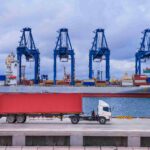
The scale of the Hormuz disruption made the visibility gap impossible to ignore. Vessels rerouting via the Cape of Good Hope faced additional days to weeks of transit time. Toyota CEO Koji Sato described the closure as a “key challenge” for shipping; Nissan CEO Ivan Espinosa acknowledged it was disrupting distribution across the Middle East, the brand’s second-largest export market.
Most OEMs and Tier 1 suppliers can tell you where their direct partners are located. Far fewer can tell you with confidence which of their Tier 2 or Tier 3 suppliers are exposed to a specific route, port, or region, and fewer still can tell you where in-transit inventory actually sits at any given moment. Supply chain visibility has historically stopped at the first tier. In a stable world, that was an acceptable limitation. In a world where a shipping strait can close in less than 24 hours, it is an operational liability.
The challenge is not simply mapping where components originate. It is knowing where they are during a disruption. That requires visibility that extends not just to suppliers, but to the logistics providers moving goods through the network.
When the Network Seizes, the Costs Are Concrete
The Hormuz closure did not take long to move from shipping disruption to production threat. Aluminium Bahrain, the world’s largest single-site aluminum smelter, declared force majeure and cut output by 19% because it could not load shipments through the Strait. For automotive manufacturers, examples like this are direct hits to input costs on steel, plastics, and components that move through every vehicle on every production line.
Layer on top of that the insurance and freight cost increases for vessels rerouting around Africa, the port congestion building at alternative hubs, and the cascading effects on subsequent shipping contracts as displaced containers ripple through the system. This is what supply chain fragility looks like in practice. Networks built without buffer, without route redundancy, and without real-time visibility into where goods are moving have no early warning system. By the time shortages register internally, weeks of recovery time have already been lost. The question is not whether the next disruption will expose those gaps again. It is whether teams will have better information when it does happen again.
Visibility Has to Extend Further, and Include Logistics
Building genuine supply chain resilience starts with a more honest accounting of what visibility actually means. For most automotive manufacturers, visibility programs have focused on supplier data: where components are made, who manufactures sub-assemblies, what the lead times are. That is necessary but not sufficient.
Hyundai was able to maintain production through the Hormuz disruption in large part because it had been building inventory buffers since the pandemic and had the operational flexibility to reroute. Its CEO confirmed rerouting vessels around the Cape of Good Hope while simultaneously accelerating a shift to regional European sourcing and targeting 80% domestic supply chain utilization in the U.S. That response was possible because the company had both the information and the infrastructure to act. Most manufacturers do not yet have both, and the ones that don’t will keep discovering their exposure after the fact.
Tariff volatility compounds the challenge further. A fixed policy change, however painful, can be modeled and absorbed. What procurement and sourcing teams cannot plan around is a policy environment that shifts week to week, where exemptions appear and disappear, and the rules governing cross-border trade are subject to change on short notice. For an industry with multi-year tooling cycles and long supplier qualification lead times, that uncertainty is often more damaging than whatever the policy ultimately settles on.
The Technology Gap Is an Accessibility Gap
Here is the challenge that rarely gets enough attention in resilience conversations: the visibility and data infrastructure that large OEMs are investing in is not automatically accessible to the suppliers and logistics partners they depend on. A Tier 2 or Tier 3 supplier operating on tight margins may not have the resources or technical capacity to implement enterprise-grade supply chain platforms. If the solution only works for the largest players in the network, it does not actually solve the problem, it just moves the blind spot further down the chain.
What the industry needs is an open, technology-agnostic approach to visibility. One that can be adopted and adapted by partners regardless of their size or technical sophistication. The goal should be interoperability: processes and platforms that suppliers and logistics providers can participate in without requiring major upfront investment or building capabilities from scratch. If smaller suppliers cannot join the network affordably, the network remains incomplete.
From Bespoke Processes to Collaborative Infrastructure
The deeper structural shift the industry needs goes beyond technology investment. It requires moving away from the model where supply chain tools are designed as bespoke solutions built around the needs of a single buyer at the top of the chain.
A collaborative infrastructure model changes the equation. Platforms built for wider adoption across supply chain disciplines demand management, transportation, logistics tracking, inventory visibility, and allow suppliers and logistics providers to implement once and apply the capability across all their customer relationships. That reduces the investment requirement, eliminates duplicated process, and creates a network effect: as more partners join, the visibility and resilience of the entire chain improves, not just the one segment a single OEM can see.