Written by Neil Sahota, Chief AI Officer at loanDNA
Each time global supply chains seize up, the conversation follows a predictable script. Companies blame shipping lines. Governments blame geopolitics. Analysts blame demand shocks. Everyone talks about resilience as if it were a philosophical concept rather than an operational one.
What do they all forget about? Ports.
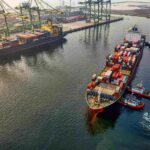
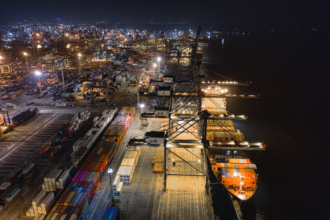
Ports are where global trade becomes physical… real. Sadly, they are also where digital transformation quietly goes to die.
Over the past several years, I’ve worked with organisations across logistics, infrastructure, and public–private partnerships on technology adoption. What consistently surprises executives outside the port ecosystem is how little real-time intelligence governs these environments. For assets that move over 80% of global trade by volume, ports remain astonishingly opaque, fragmented, and resistant to systemic optimisation.
Let’s be clear. This is not a technology problem. It is a governance problem, and AI exposes it.
If you are a CEO whose business depends on global trade, ports determine your lead times, your inventory risk, and your ability to respond to shocks. You may not control ports, but ports increasingly control you. The leaders who understand this dynamic early will stop reacting to disruptions and start shaping the conditions that cause them.
Unfortunately, the popular narrative is that ports are modernising. Cranes are automated. Sensors are installed. Dashboards exist. However, digitisation without intelligence is just instrumentation. Most ports still operate as collections of semi-autonomous actors: terminal operators, customs authorities, trucking firms, shipping lines. Each trying to optimise locally while (hopefully) sub-optimising the system.
Tragically, they don’t realise that AI’s real value for ports is not automation. It is orchestration.
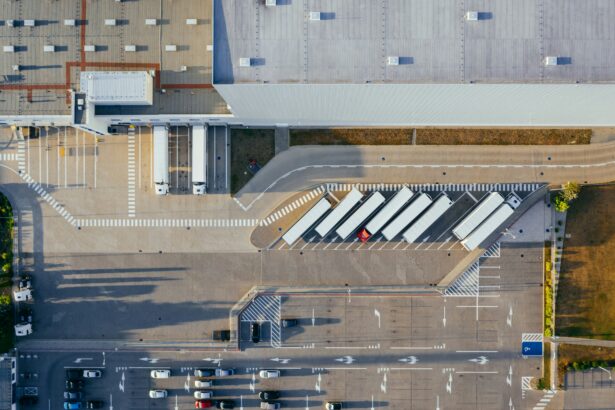
Consider the problem of congestion. When ports back up, the assumption is that capacity is insufficient. In reality, congestion usually results from poor coordination across yard operations, gate flows, labour availability, and downstream transportation. AI models trained on historical vessel arrivals, yard movements, weather, labour shifts, and inland transport constraints can predict congestion days in advance. I’ve seen this done, and the technology produces sound decision-making and value.
So why does this happen? Authority fails. No single entity owns the optimisation problem end-to-end. This fragmentation has real economic consequences. McKinsey estimates that congestion and inefficiencies at ports can increase total supply chain costs by 10–20%, costs that ultimately show up as inflation or lost competitiveness. However, most mitigation efforts focus on expanding physical infrastructure, a decade-long solution to a coordination problem that could be addressed in months with better intelligence.
Compounding the problems, ports also suffer from a maintenance paradox. Cranes, rail systems, and yard equipment are critical assets, yet maintenance schedules are often time-based rather than condition-based. AI predictive maintenance (already standard in aviation and manufacturing) remains underutilised in ports, despite clear evidence it can reduce unplanned downtime by 30–50%.
When I ask port executives why adoption lags, the answer is rarely technical. Honestly, I hear institutional issues: maintenance budgets, labour agreements, and vendor contracts are structured around predictable routines, not probabilistic optimisation. AI threatens those assumptions, and that’s core value add.
There is also a security dimension that receives surprisingly little public attention. Ports are prime targets for smuggling, sanctions evasion, and cargo manipulation. Traditional inspection regimes are blunt instruments. AI anomaly detection (e.g., correlating manifests, routing behaviour, container imagery, and historical risk patterns) dramatically increases detection rates without slowing throughput. Already, several customs authorities have demonstrated this quietly (because publicising success invites political scrutiny.) Silence, in this case, is strategic.
However, what makes ports especially challenging is that they sit at the intersection of public responsibility and private profit. This hybrid model makes transformation slow, but it also makes it extraordinarily valuable. Small improvements in throughput, reliability, or energy efficiency cascade across entire economies. Ports are leverage points hiding in plain sight.
In terms of sustainability, AI helps executives in the areas they struggle to operationalise. For example, ports are major energy consumers and emissions hubs. However, AI energy optimisation across cranes, yard vehicles, and facilities can materially reduce emissions without waiting for new fuels or regulatory mandates. This is one of the few areas where operational efficiency and climate goals align immediately.
So why isn’t this being discussed more openly? Because AI forces uncomfortable conversations about who decides, who benefits, and who loses discretionary control. Ports are conservative with good reason: mistakes are expensive. However, clinging to legacy coordination models has become the bigger risk.
The next phase of global trade competitiveness will not be decided by shipping capacity alone. It will be decided by which regions treat ports as intelligent systems rather than static infrastructure. For CEOs, this creates a strategic choice. You can continue to model ports as external risks, or you can engage them as partners in intelligence-driven optimisation. The latter requires understanding governance, incentives, and system design as deeply as technology.
The organisations that do this well won’t issue press releases about “smart ports”. They’ll quietly see fewer disruptions, faster recovery, and more predictable flows… advantages competitors will struggle to replicate after the fact.
In a world where resilience has become a board-level concern, ports are no longer someone else’s problem. They are the bottleneck leaders can no longer afford to ignore.