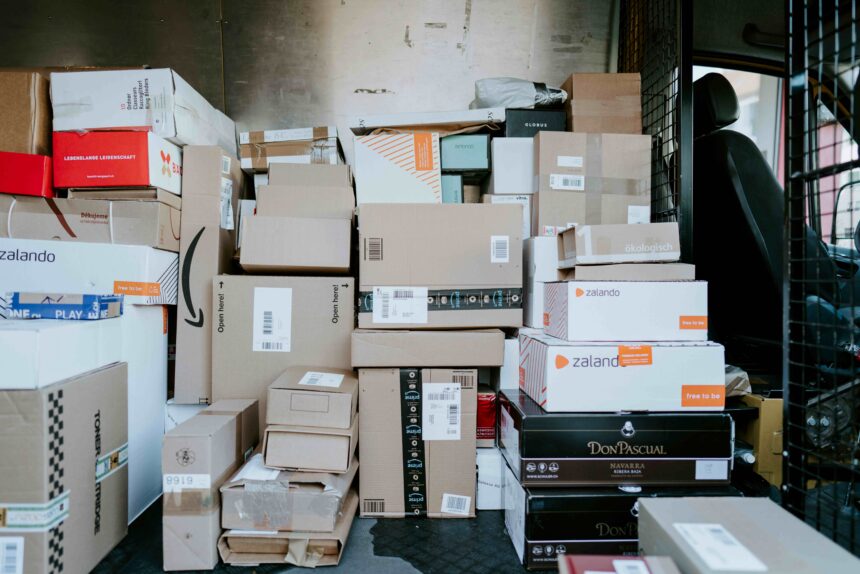
Despite rising delivery costs, inflationary fears, heightened consumer expectations, and global competitors increasing their market share, Australian retailers are forecasting growth in 2026, according to Shippit’s State of Shipping Report.
The report, which draws on data from hundreds of millions of deliveries and research of thousands of consumers, carriers, and retailers in Australia and New Zealand sought to understand the pressures, gaps and opportunities defining retail delivery in 2026.
It found that while delivery is faster and more reliable than ever it’s also more expensive, bridging the gap between consumer expectations and retailer performance must be the priority as Amazon, Temu, and Shein continue to win market share.
“Australian retail has never been more complex, and delivery has never been more consequential,” commented Rob Hango-Zada, Co-Founder and Joint-CEO of Shippit. “Costs are rising, consumer expectations are hardening, and global platforms are growing their share with every year that passes.
“But the retailers making ground aren’t waiting for conditions to ease, they’re closing promise gaps, building data foundations, and treating fulfilment as a growth lever. This report shows how far the industry has come, and how much further it needs to go.”
Delivery Costs Are Increasing, But Performance is Improving
Both standard and express delivery in Australia now costs nearly AUD$1 more on average than in 2025. In New Zealand, meanwhile, standard delivery is $0.30c more expensive, while express delivery has jumped more than NZD$3. Fuel price volatility has added further pressure, with almost half of carriers across ANZ implementing temporary surcharges this year.
- Standard delivery (AU): Up 8.7% from $10.39 in 2025 to $11.30 in 2026
- Express delivery (AU): Up 5.5% from $14.69 in 2025 to $15.50 in 2026
- Standard delivery (NZ): Up 3.1% from $9.70 in 2025 to $10 in 2026
- Express delivery (NZ): Up 23.6% from $14.10 in 2025 to $17.43 in 2026
Not only has delivery become more expensive, the threshold to qualify for free shipping has climbed to $135 (up from $123 in 2025), and only 8.8% of retailers offer free shipping with no minimum spend.
While costs are increasing, so too is network performance. In 2026, 94.1% of all deliveries were on time, continuing a strong trajectory from 2025 (93.4%), 2024 (92.3%), and 2023 (88.7%). What’s more, the average transit time for a delivery is now just 2.2 days.
However, retailers are advertising 5.2 days at checkout – a three-day gap from delivery performance. Two in three consumers say an accurate delivery date before purchase is essential or very important, and 38% say it makes them more likely to buy. Yet only 7.2% of retailers currently offer accurate delivery estimates at checkout.
“The gap between what retailers promise at checkout and what they deliver is the biggest conversion killer in ecommerce today,” Hango-Zada added. “With Amazon able to fulfil orders within 15 minutes – and shoppers demanding fast delivery and turning their back on brands that fall short of their expectations – closing that fulfilment gap must be an operational priority for retailers.”
The Amazon Effect
Amazon, Temu, and Shein are forecast to control 36% of Australian ecommerce in 2026. More than half (52%) of Australian shoppers say their delivery expectations have risen as a direct result of Amazon, up sharply from 31% in 2025. Among Millennials and Gen Z, that figure rises to 57% and 55% respectively. Today, 82% of retailers say they’re concerned about Amazon, Temu, and Shein’s growing dominance.
Two in three (68%) shoppers say they’re unlikely to return to a retailer after a poor delivery experience – a margin for error that continues to shrink (up from 64% in 2025). While their expectations are rising, their spending is steady so far in 2026:
- 2026: $142.07 per basket
- 2025: $144.69
- 2024: $140.46
- 2023: $137.90
Consumers are still spending, they’re just more deliberate about who earns it. When asked what would persuade them to shop with a retailer, their priorities are cost-effective delivery (40%), fast delivery (34%), click and collect (23%), online inventory visibility (22%), and easy returns (21%).
A Mixed Bag on Returns
The availability of easy returns is one of the top factors influencing consumer purchase decisions. However, just 11% of retailers offer free returns – down from 49% in 2018. After falling to 58% in 2025, the proportion of retailers offering easy returns rebounded to 70%.
Retailers are investing in returns, with 25% listing easy or free returns among their core investment priorities this year. It’s a necessary investment, with one in four (25%) consumers saying they won’t shop with a retailer if it doesn’t offer free or easy returns, while 21% would be hesitant.
AI Surges to the Top of Retail Investments
AI has moved from a joint-second investment priority in 2025 to the single biggest in 2026, with 35% of retailers investing in AI and automation. Retailers expect it to have its greatest returns across personalisation and customer insights (40%), conversational AI and virtual shopping assistants (30%), automation in fulfilment (30%), and predictive analytics for demand and pricing (16%).
But the data reveals a structural risk: two in three retailers rarely or never use delivery data to inform their operations. AI investment without the data foundation to support it won’t deliver the returns retailers are projecting.
As they seek to close the gap on Amazon, Temu, and Shein and pursue their growth forecasts, AI – alongside faster delivery, stronger fulfilment, and more accurate promises – will be a critical growth lever.
“The unlock isn’t a smarter AI assistant – it’s data we can trust,” commented Matt Lang, ANZ Online Transport Operations & Strategy Manager, Kmart. “Our first job is unifying order, carrier manifest, invoice and event-tracking data into a single source of truth across fulfilment and logistics. From there, AI can surface service gaps and cost-to-serve, automate carrier billing queries when discrepancies show up, and eventually give us conversational AI we can interrogate in real time – not just receive reports from.”
Graham Jackson, CEO, Fluent Commerce, added: “Local retailers can win where marketplaces struggle: trust, service, and local immediacy. That means faster and more reliable delivery to local postcodes, clearer delivery promises, convenient collection options, and truly easy returns, paired with brand experience and loyalty that marketplaces can’t replicate. The key is turning stores into fulfilment and service hubs, and using orchestration to make fulfilment choices that protect margin while meeting customer expectations.”
To read the full report, visit: https://www.shippit.com/state-of-shipping-report