Written by Lee Koutsos, ANZ Director Connected Workforce Solutions and Storage Equipment, Dematic
Most warehouse operators are not short on ideas for improvement. The challenge is knowing where to start, especially when budgets are constrained and large-scale automation is not yet feasible.
Across Australia and New Zealand, warehouse operators are facing a difficult balancing act. Labour costs continue to rise, recruitment remains a challenge and customer expectations around fulfilment speed and accuracy show no signs of slowing down. At the same time, many businesses are being more cautious about where and how they invest.
That environment is pushing operators to look for technologies that can deliver operational gains without major disruption. Voice and vision technologies are increasingly filling that role, helping warehouses improve productivity while supporting both manual and automated workflows.
Getting More Out of Existing Operations
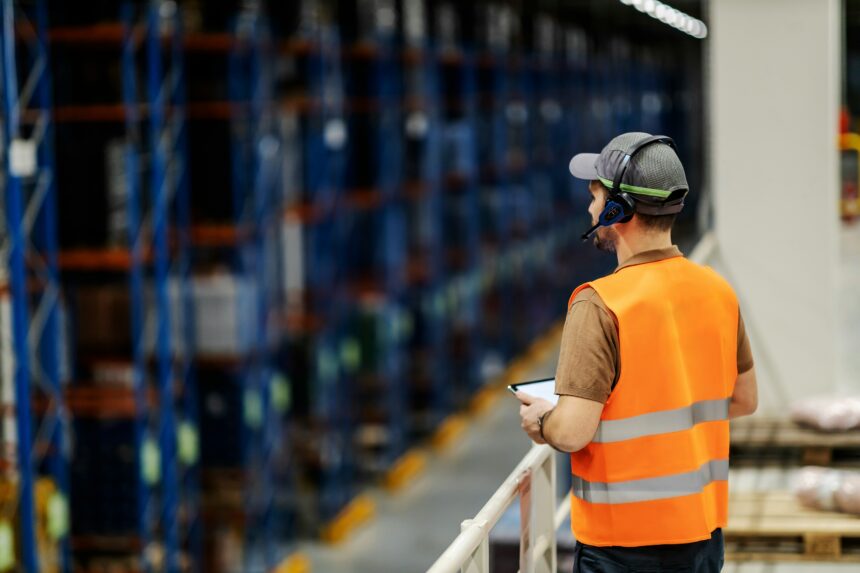
Voice-directed warehousing has been around for many years and has evolved in terms of applications and performance benefits. The concept itself is relatively simple. Operators wear a headset and receive spoken instructions directing them to pick locations, quantities and tasks. Workers then verbally confirm actions as they move through the warehouse.
Because operators can work hands-free and eyes-up, the process removes many of the friction points associated with paper pick slips, handheld scanners and manual data entry.
Operators can move more efficiently, picking accuracy improves and onboarding new workers becomes faster and easier.
The productivity improvements delivered through voice-directed workflows are also well established. Many warehouse operations implementing voice-directed picking report measurable gains in both speed and accuracy, particularly in eaches and case picking environments where repetitive manual tasks can slow productivity. This typically achieves 25% improvements in case picking and 40% in eaches picking productivity, with accuracy over 99.9%.
Importantly, voice solutions are not just suited to large-scale operations with extensive automation already in place. In many cases, they provide an accessible entry point for warehouses beginning their digital transformation journey and looking to improve operational consistency before making larger infrastructure investments.
Bringing Vision into the Warehouse
For operations looking to take the next step, vision technology can add another layer of support for warehouse workers. Vision picking solutions use smart glasses with an integrated heads-up display that provides operators with visual instructions directly within their line of sight. Workers can view product images, pick locations, quantities and pallet build guidance while continuing to work hands-free.
Vision solutions are particularly valuable in environments with large product ranges, visually similar stock items or tasks where picking accuracy is especially important. They can also support multilingual workforces and can be highly effective in temperature-controlled environments where handheld devices are less practical.
Beyond picking, the same hands-free approach can also support replenishment, stocktaking, maintenance and inspection activities across the warehouse.
Supporting Automation Journeys
Importantly, voice and vision technologies should not be viewed as alternatives to automation. Instead, they often work best as part of a broader operational improvement strategy.
If warehouses are already using automated systems, these technologies can help streamline worker interaction with workflows and warehouse management systems. For businesses still operating largely manual facilities, they can provide a manageable and lower-disruption way to begin improving processes while building the operational discipline and digital familiarity needed for future automation projects.
Another advantage is flexibility. Unlike large, fixed automation infrastructure, voice and vision solutions can often be deployed incrementally. Businesses can begin with a single function, workflow or operational area, then expand implementation over time as requirements evolve and the business case strengthens.
A Practical Step Forward
Not every warehouse is ready for a major automation project, nor does every operation need one immediately. However, most warehouses have opportunities to improve productivity, speed, accuracy and workforce efficiency.
While operators are being asked to do more with tighter budgets and ongoing labour pressures, voice and vision technologies are proving to be practical tools that can help warehouses work smarter while supporting longer-term operational growth.
To find out more about Dematic’s voice and vision solutions, visit dematic.com